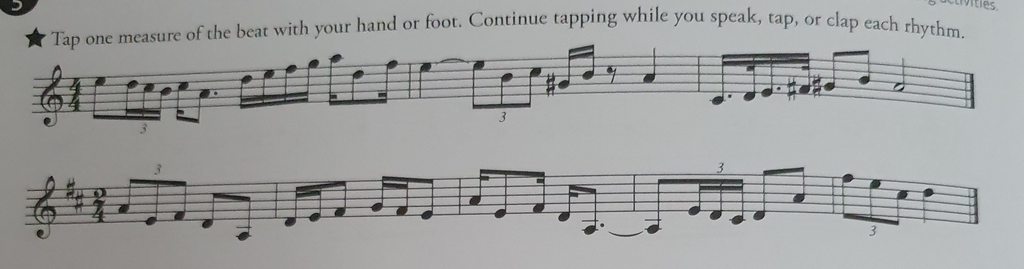
I think it is also important to recognize the purpose for practicing sight-reading, which could be very different depending on the situation. For someone that is already somewhat accomplished and play together with others it is obviously of utmost importance to be able to listen and follow the timing. It is also important to know what can be simplified and skipped in a first read-through if the complexity is too high to nail it all prima vista. It's also necessary to always keep track of where in the sheet music the rest of the musicians are in case you flub totally and have to skip some beats or a measure or two before getting back in.
But the way I understand this thread, the sight-reading practice here is of a different nature and purpose. It's primarily in order to learn to read at all or more fluently, not in order to be able to eg accompany soloists in the near future without seeing the sheet music in advance. For someone who is very new to reading and doesn't yet have immediate recognition of all notes on the staffs including ledger lines it makes total sense to me to practice this specifically. If you are able to read a passage perfectly with all dynamics, expressive markings etc on your first try I'd say the material is too easy to be of real value to learn to read better. We generally learn best when appropriately challenged, so if someone can read/clap rhythms fine on their own but struggle to recognize notes, chord and arpeggio shapes and to figure out fingerings on the fly, I think it would be good at that stage to focus the practice on the aspects that cause struggle, even if it means not being able to keep in time when it gets tricky. But you need to be clear with yourself why you are practicing reading.